
Types of replicas
Electric, gas, compressed air or spring: how each family works, its forces, its limits and for whom it is made.
Indicative prices in euros, recorded in 2026: they vary little from one European country to another.
Contents(6)
Electrical
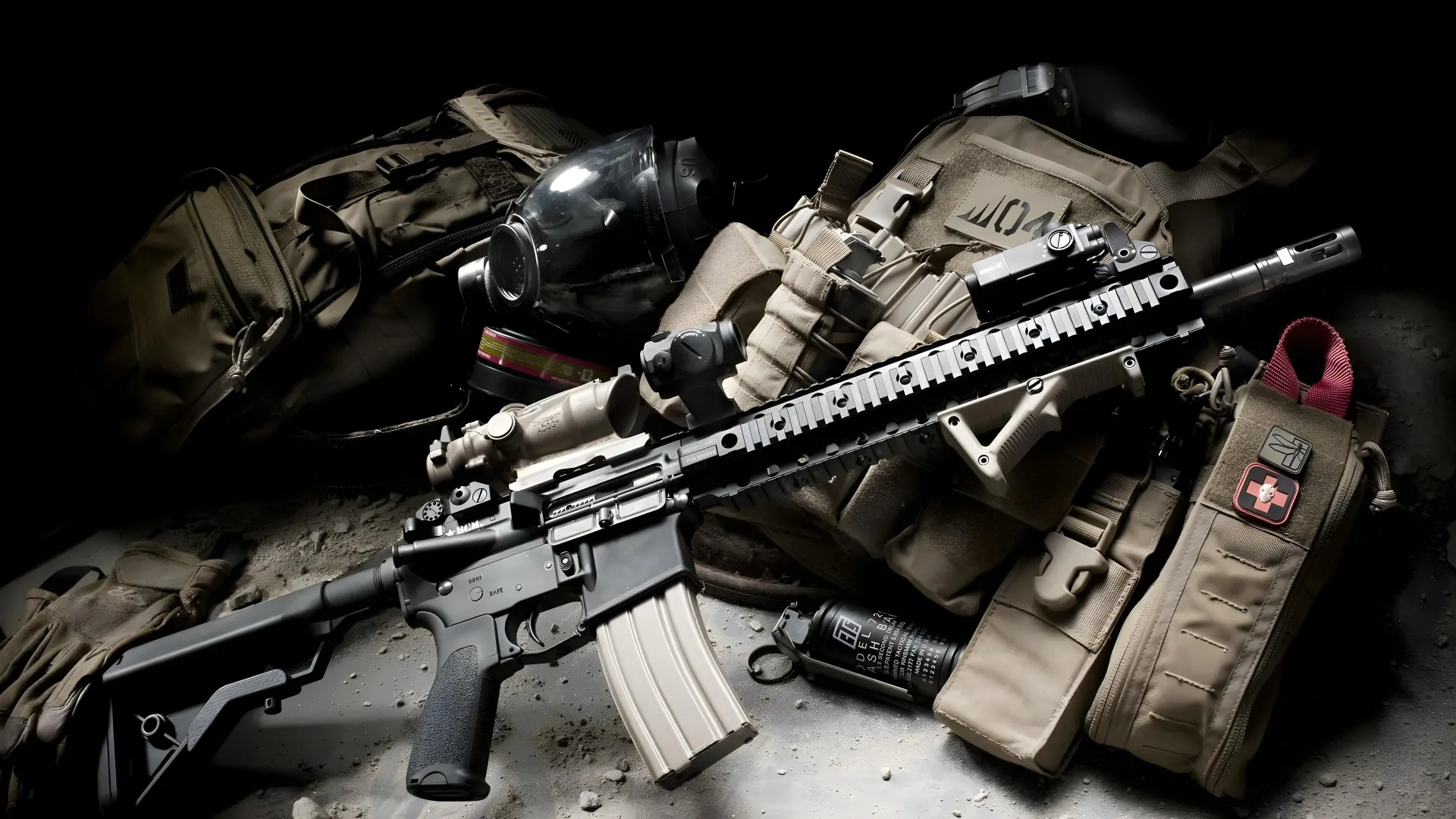
The AEG (definition) (Automatic Electric Gun) is the most common replica. An engine powered by a battery drives a Gearbox that compresses a spring (definition): at each cycle, the released piston (definition) pushes the air that propels the ball.
Benefits
- Easy to use and reliable
- Works at all times
- Low cost: recharge the battery
- Very wide choice of models and parts
Disadvantages
- No hindrance, less realism
- Batteries to manage, especially LiPo (definition)
- Complex internal mechanics to repair
- Indicative price: €150 – €250
Entry-level
A replica of brand recognized, solid, ready to play.
- Indicative price: €250 – €450
Medium range
Best finish, integrated electronics and quality internal parts.
- Indicative price: from €450
High-end
Electronic relaxation, cannon and precision hop-up (definition), metal finish.
Gas
The GBB (definition) (Gas Blow Back) stores liquefied gas in the charger. With each shot, part of the gas pushes the ball and part of the gas pushes the head back: it is the retreat that makes its realism.
Benefits
- Back and manipulation close to the real
- Mechanics simpler than a gearbox
- Reloading and realistic handling
Disadvantages
- Loss of power in cold weather
- Gases to buy, more expensive chargers
- Joints to be maintained regularly
- Most common
Green gas
Lubricated propane, about 7-8 bar at 20 °C. Suitable for most replicas.
- According to the reply
More powerful gases
Mixtures with higher pressure, useful in cold weather but which fatigue a replica which is not intended for.
- 12 g cartridges
CO2
Pressure is much higher and less sensitive to cold. Only replicas and chargers designed for.
Compressed air
A HPA (definition) (High Pressure Air) replica pulls with compressed air stored in a bottle, lowered by a regulator and then released by an electrovan or valve. Pressure does not depend on temperature.
Benefits
- Very regular power, at all times
- Finely adjustable power and speed
- Few wear parts
Disadvantages
- High initial investment
- Bottle and hose to be worn
- Filling station required
- Prohibited on certain grounds
Spring
The player guns the spring himself before each shot, by operating the head or pump. It is the simplest and most accurate system once properly set.
Benefits
- No energy to buy
- Works at all times
- Silent (definition) and very precise
- Minimum maintenance
Disadvantages
- One shot at a time
- Tiring rearmament with a powerful spring
- Not suitable for dynamic play
- Indicative price: €150 – €400
Accuracy rifle with head
The role of precision shooter, with a minimum distance of engagement on most terrains.
- Indicative price: €30 – €120
Support weapon
Gun or spring pump rifle: economical, reliable, always ready.
Specialized
- DMR
Semi-automatic precision shooter
Electric or gas, braided at once, with an intermediate power between the rifle and the headgun.
- Several balls
Pump rifle
Shoots three to six balls at a time: formidable at short distance.
- Support
Grenade launcher
Gas shells that project a stack (definition) of logs. Allowed or not according to terrain.
Comparison
| Type | Taking charge | Realism | User cost | Maintenance | For whom |
|---|---|---|---|---|---|
| Electrical | Excellent | Medium | Low | Medium | Beginners, regular game |
| Gas | Average | Excellent | High | High | Realism, experienced players |
| Compressed air | Average | Medium | Medium | Low | Regularity, competition |
| Spring | Excellent | Variable | Very low | Minimum | Accuracy, extra |
Did you go around this guide?
Nearby guides
Troubleshoot
Useful calculators
An error or an omission in this guide?Tell us.